
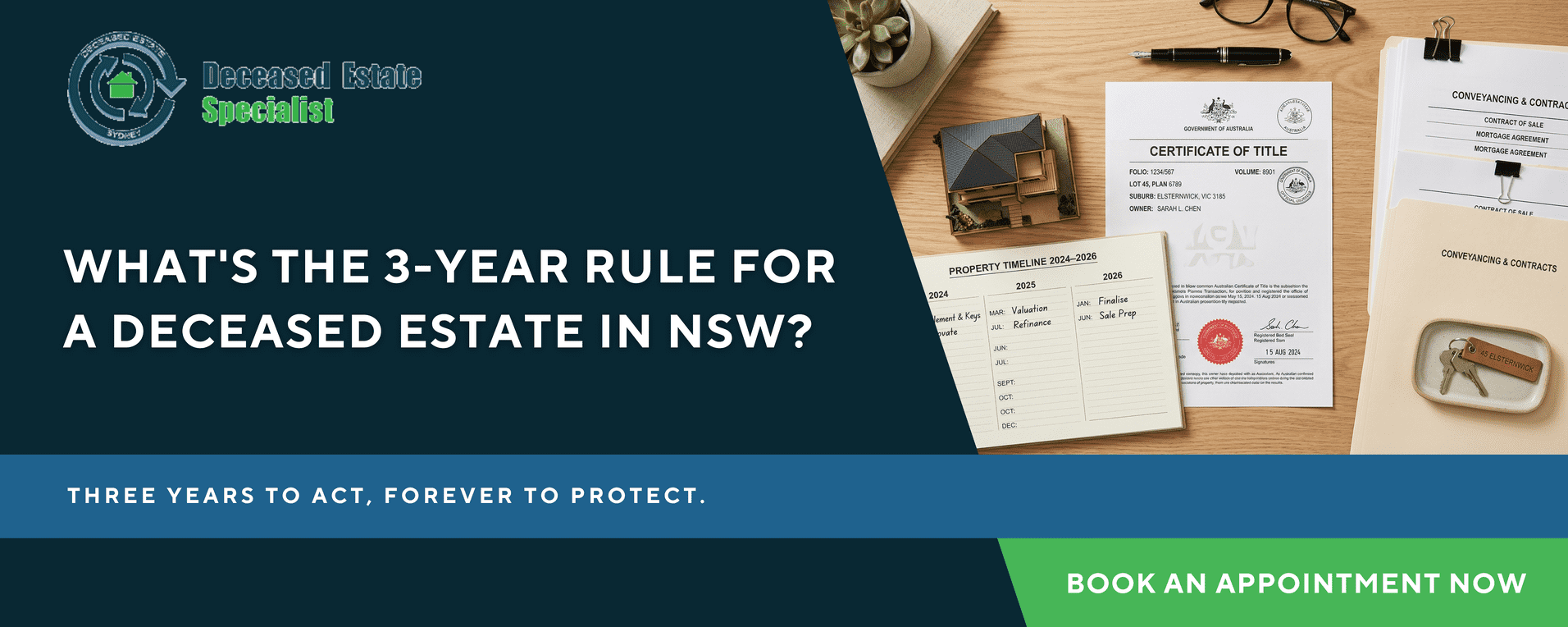
Handling a deceased estate in New South Wales (NSW) can be a challenging and emotional experience. If you’re involved in a family home, you might have heard of the “3-year rule for a deceased estate.” This rule is important for understanding which taxes may apply.
What does this mean for you if you are the executor of the estate or a beneficiary? Let’s break it down further to clarify its significance and how it might affect you.
3 Essential Facts About the 3-Year Rule in NSW
The “3-year rule” is often shorthand for several tax concessions that expire or change after the third year of managing an estate.
2+1 Extension for CGT
The Australian Taxation Office allows a 2-year period to sell a deceased person’s main residence tax-free, with a possible extension to 3 years if complications arise.
Concessional Income Tax Rates
For the 3-year rule for a deceased estate, it can be taxed at concessional rates, including access to the full tax-free threshold of $18,200, reducing tax on estate income.
Land Tax Concessions
In NSW, a deceased estate is typically exempt from land tax for up to 2 years on the deceased’s principal residence, with the possibility of a 3rd-year extension if managed by the executor and not yet transferred to beneficiaries.
Why NSW Mandated These Timelines
NSW and Federal authorities created rules to balance tax revenue needs with the realities of bereavement. They implemented a three-year grace period for estate administration, recognising the time required to settle a deceased estate in Australia.
This period provides concessional tax rates and CGT exemptions, protecting beneficiaries from sudden tax liabilities during the estate’s finalisation.
How Deceased Estate Specialists Assist with Property Preparation
When someone passes away, the time limit for managing their estate starts from their date of death, not when the court approves the estate. This makes it really important to act quickly. That’s where our team of experts comes in.
Here’s how we can assist: